Open Banking Payments in the UK
Accept Open Banking payments in the UK with instant settlement, no chargebacks, and lower fees. Complete guide for UK merchants.
What is Open Banking in the UK?
Open banking is a regulatory and technological framework that allows consumers and businesses in the United Kingdom (UK) and European Union (EU) to securely connect their bank accounts and share their financial data with authorised third-party providers. These providers can:
- Initiate payments on the user's behalf: These are called Payment Initiation Service Providers, or PISPs.
- Access and collect account information: These are known as Account Information Service Providers, or AISPs.
To ensure improved consumer protection and lower fraud rates, the open banking framework also requires heightened security standards to manage consumer authentication and protect consumer data.
To make this secure and scalable, UK regulators required all major banks to implement standardised APIs. These APIs allow licensed developers to build services on top of bank infrastructure without compromising security or privacy.
Open Banking in the United Kingdom: From Regulation to Real-World Adoption
Open banking started as a regulatory initiative under the European PSD2 directive, with the goal of increasing competition, transparency, and innovation in financial services. In the UK, it was driven forward by the Competition and Markets Authority (CMA).
Today, open banking is no longer experimental. In the UK alone, over 15 million users rely on open banking services every month, and the infrastructure is subject to oversight and control from the Financial Conduct Authority (FCA).
Open Banking Use Cases
Open banking is already powering a range of useful services across the UK and the EU. Here are a few common examples:
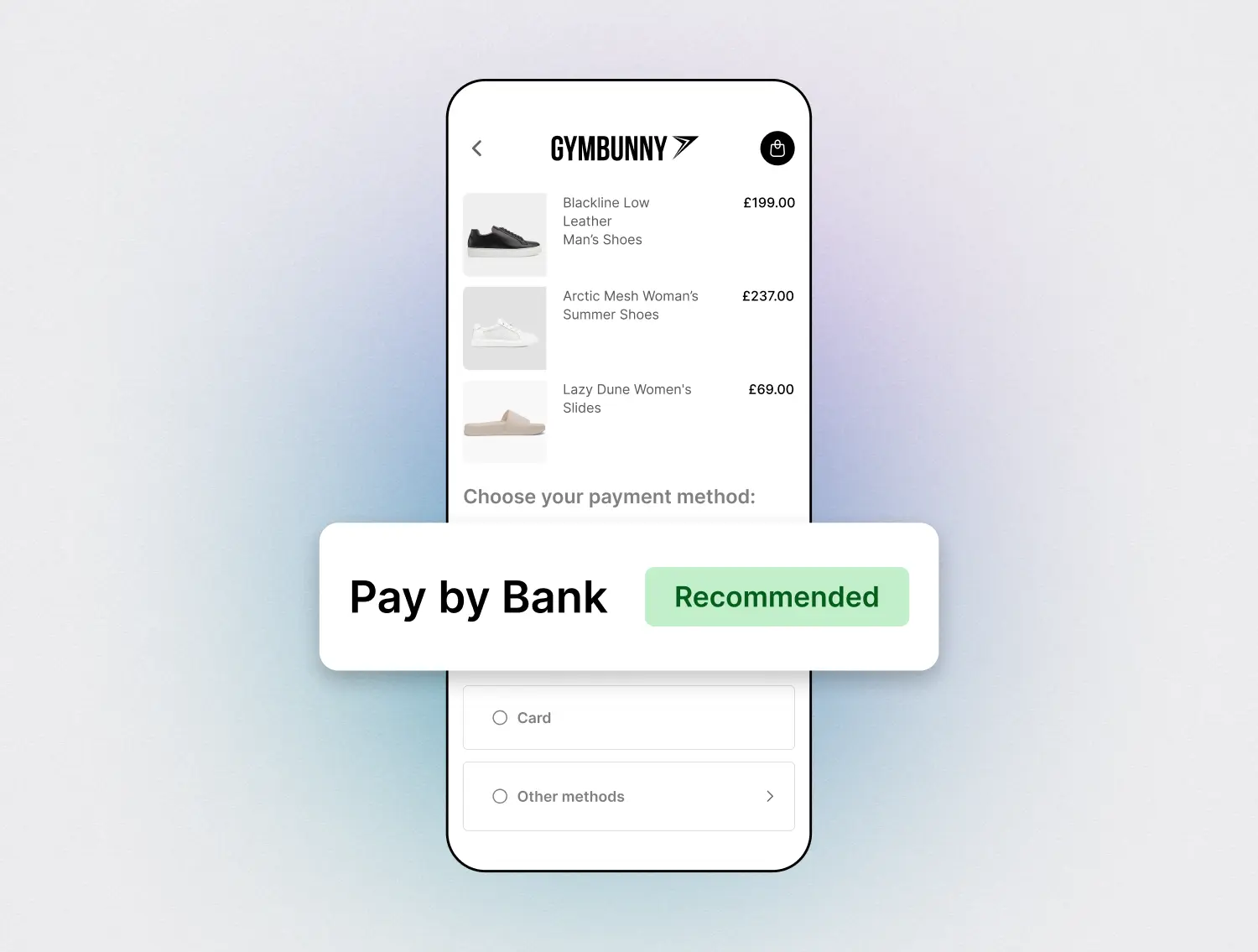
- Payment Initiation: Users can bypass card networks and pay directly from their bank accounts. This includes retail options like Pay by Bank at checkout.
- Account aggregation, personal finance tools and budgeting apps: Apps like Emma, Moneyhub, and Snoop use open banking to show users all their bank accounts in one place.
- Credit Underwriting: Lenders can use open banking to provide faster lending and credit checks.
- Small business accounting tools: Platforms like Xero and QuickBooks can automatically pull in bank transactions to simplify bookkeeping.
- Subscription and payment management: Some services help users find and manage their subscriptions or recurring payments.
Benefits of Open Banking for UK businesses and consumers
For Merchants
- Instant settlement: Payments clear in seconds via Faster Payments, helping improve float and cash flow.
- No chargebacks or card fraud: Payments are authenticated by the customer's bank, removing fraud risk and related disputes.
- Lower fees: By bypassing card networks and intermediaries, businesses can reduce processing costs.
For Customers
- Stronger protection against fraud: Every payment requires secure bank authentication. No card numbers means nothing to steal.
- Faster checkout: Customers approve payments directly in their banking app, often with biometrics.
- Real time control and visibility: Payments are authorised through the customer's own bank, with instant confirmation.
How Open Banking Payments Work in the UK
If you are a UK business looking to accept open banking payments, the process can be time consuming and complex. Here's what most businesses face:
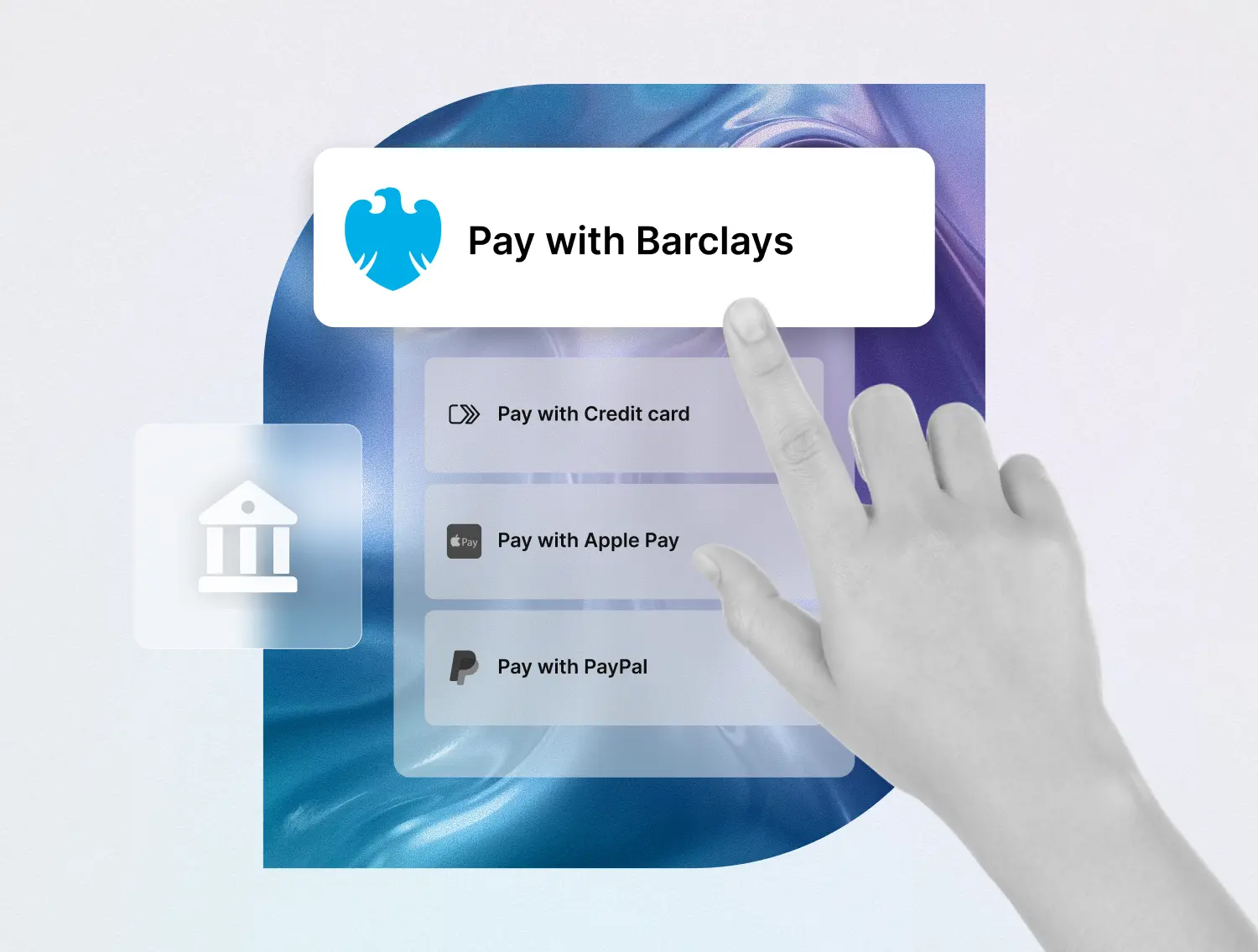
- Work with a licensed open banking provider: These are regulated third party providers (TPPs) that connect your business to customer bank accounts.
- Build an integration: Implementing open banking directly usually requires development resources.
- You handle compliance and user experience: You need to ensure your solution meets payment regulations and supports Strong Customer Authentication.
Open Banking Payment Flow in the UK
- Customer selects Pay by Bank at checkout and chooses their bank from a list
- They are redirected to their bank app or online banking with transaction details pre-filled
- The customer completes Strong Customer Authentication (SCA) using biometrics or two factor login
- Payment is approved and funds are transferred directly to the merchant via Faster Payments
- Customer is redirected back to the merchant with instant confirmation
How Quidkey Simplifies Open Banking Payments
At Quidkey, we handle the complexity so you can be free to focus on your business. Our platform connects to multiple third party providers across different markets and automatically selects the best path for each transaction.
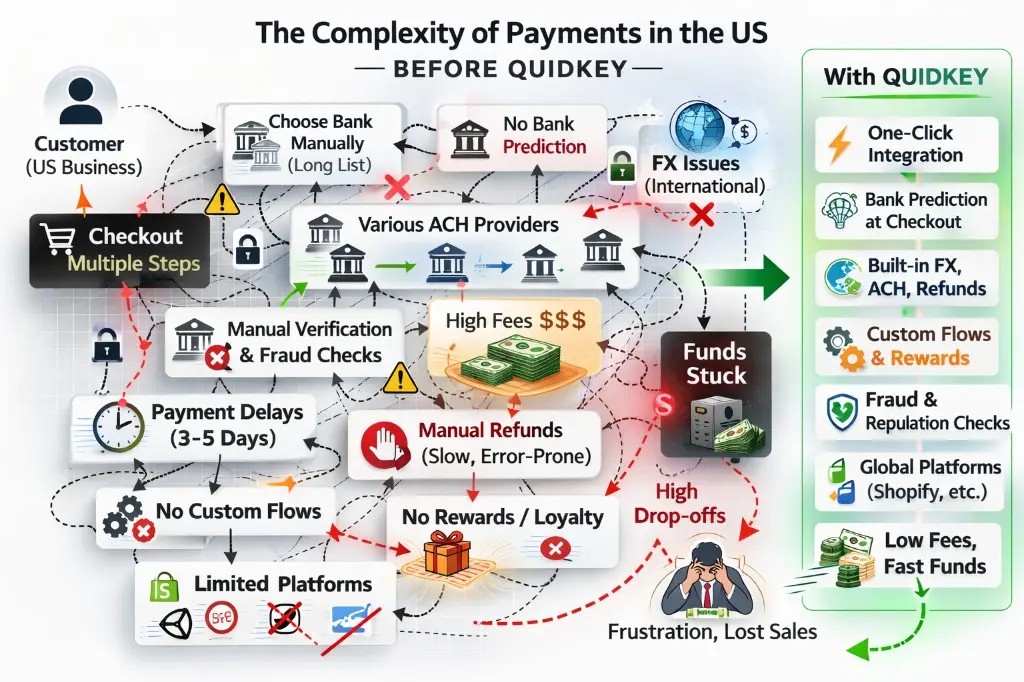
Quidkey vs Traditional Open Banking Solutions
Quidkey simplifies payments so you can focus on growing your business. Accept payments across borders, support multiple currencies, and go live in minutes.
What Quidkey Adds to Open Banking
Open banking provides the rails. Quidkey makes them usable.
While providers like Tink, TrueLayer, and Token offer secure access to bank accounts, they stop short of delivering the full checkout experience. Quidkey fills that gap by combining real time orchestration, bank prediction, cross-border support, and merchant-ready integrations.
Get Started with Quidkey
Quidkey is not just another payment provider. It's open banking actually done right.
Instant payouts. No fraud. No chargebacks. Lower fees. Seamless integration.
Go live in minutes and take control of how your business gets paid.